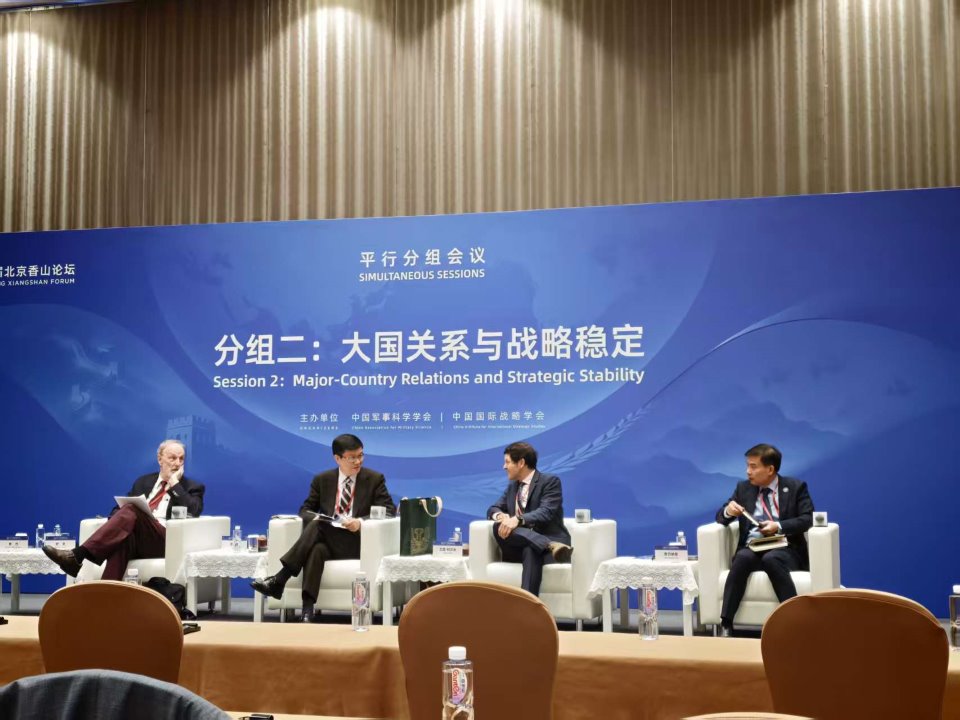
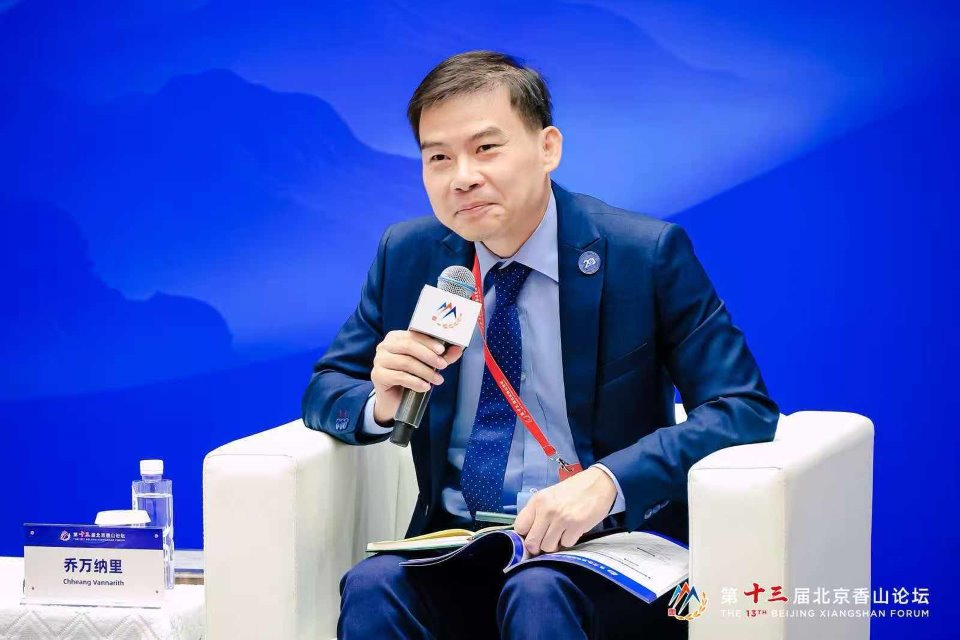
Beijing, 18 September 2026 — H.E. Dr. Chheang Vannarith, Deputy Secretary-General and Chairman of the National Assembly Advisory Council of Cambodia, called for a greater role for small and middle powers in shaping the emerging international order at the 13th Beijing Xiangshan Forum, held from 15 to 17 September 2026.
The forum, themed “Build Consensus on Stability, Advance Security Governance Together,” featured four plenary sessions and a series of parallel sessions covering international order, major-country relations, regional and maritime security, emerging technologies and other contemporary security challenges.
Speaking at a parallel session on “Major-Country Relations and Strategic Stability,” Dr. Chheang Vannarith said the world is undergoing a rapid transformation and redistribution of power, with new centres of economic, political and strategic influence emerging alongside established powers.
He stressed that discussions on the future international order should not be confined to major powers, saying small and middle powers must also have a meaningful role in shaping a more inclusive, fair and just international system.
“The changing global power structure presents both opportunities and vulnerabilities for smaller states,” he said. Such countries are increasingly seeking constructive relations with multiple major powers and centres of influence to safeguard their national interests, strategic autonomy and economic security.
Rather than being forced into exclusive alignments, smaller states need sufficient diplomatic space to diversify their partnerships and cooperate with different power centres, he added.
“Both competition and cooperation are normal features of relations among major powers. The objective should not be to eliminate competition, but to ensure that it remains healthy, stable and manageable and does not escalate into confrontation or undermine the broader international system,” Dr. Chheang Vannarith said.
He described China-U.S. relations as the world’s most consequential major-country relationship, given their far-reaching impact on global peace, security and prosperity.
Dr. Chheang Vannarith expressed hope that Beijing and Washington would maintain sustained dialogue and place greater emphasis on consultation, communication and consensus-building, despite their differences.
“Trust cannot be established through declarations alone; it requires frank dialogue and practical cooperation at different levels of government and across various sectors,” he said.
Such engagement, he said, could help reduce misperceptions, foster cooperation and provide channels for managing disagreements before they develop into crises.
Dr. Chheang Vannarith further called for more inclusive global security governance, saying international institutions and mechanisms must reflect a broader range of voices and interests as global power becomes increasingly dispersed.
Greater participation by small and middle powers, developing countries and the Global South would enhance the legitimacy and effectiveness of global governance, he added.
He concluded that lasting strategic stability could not be achieved solely through arrangements among major powers. A durable international order must also recognize the agency of smaller states, address their legitimate security and development concerns, and allow countries to cooperate with multiple partners without being compelled to choose sides.